
Auckland Museum - Collections Online
Subject
| Predicate | Object |
|---|---|
| http://collections.aucklandmuseum.com/ontology/core/accessionDate | 1971 |
| http://collections.aucklandmuseum.com/ontology/core/accessionDateEarliest | 1971-01-01T00:00:00.000Z |
| http://collections.aucklandmuseum.com/ontology/core/accessionDateLatest | 1971-12-31T00:00:00.000Z |
| http://collections.aucklandmuseum.com/ontology/core/accessionNumber | 1976.75 |
| http://collections.aucklandmuseum.com/ontology/core/classification | http://api.aucklandmuseum.com/id/thesauri/classification/NM3.12428 |
| http://collections.aucklandmuseum.com/ontology/core/creditLine | collection of the Mackelvie Trust Board, Auckland, on loan to Auckland War Memorial Museum, , M1067 |
| http://collections.aucklandmuseum.com/ontology/core/dateCreated | 1997-03-14T00:00:00.000Z |
| http://collections.aucklandmuseum.com/ontology/core/itemCount | 1 |
| http://collections.aucklandmuseum.com/ontology/core/lastModifiedOn | 2026-05-05T01:50:30.565Z |
| http://collections.aucklandmuseum.com/ontology/core/museumTag | Mackelvie Trust |
| http://collections.aucklandmuseum.com/ontology/core/nameTitle | http://api.aucklandmuseum.com/id/humanhistory/object/7493/title/1 |
| http://collections.aucklandmuseum.com/ontology/core/otherIdentifier | http://api.aucklandmuseum.com/id/humanhistory/object/7493/otherIdentifier/1 |
| http://collections.aucklandmuseum.com/ontology/core/otherTitle | http://api.aucklandmuseum.com/id/humanhistory/object/7493/otherTitle/1 |
| http://collections.aucklandmuseum.com/ontology/core/primaryRepresentation | http://api.aucklandmuseum.com/id/media/v/80928 |
| http://collections.aucklandmuseum.com/ontology/core/record_score | 45 |
| http://collections.aucklandmuseum.com/ontology/core/restriction | Predominantly Open |
| http://erlangen-crm.org/current/P108i_was_produced_by | http://api.aucklandmuseum.com/id/humanhistory/object/7493/production |
| http://erlangen-crm.org/current/P138_has_representation | http://api.aucklandmuseum.com/id/media/v/201108 |
| http://erlangen-crm.org/current/P138_has_representation | http://api.aucklandmuseum.com/id/media/v/10972 |
| http://erlangen-crm.org/current/P138_has_representation | http://api.aucklandmuseum.com/id/media/v/201107 |
| http://erlangen-crm.org/current/P138_has_representation | http://api.aucklandmuseum.com/id/media/v/201109 |
| http://erlangen-crm.org/current/P138_has_representation | http://api.aucklandmuseum.com/id/media/v/2987 |
| http://erlangen-crm.org/current/P138_has_representation | http://api.aucklandmuseum.com/id/media/v/201111 |
| http://erlangen-crm.org/current/P138_has_representation | http://api.aucklandmuseum.com/id/media/v/201110 |
| http://erlangen-crm.org/current/P138_has_representation | http://api.aucklandmuseum.com/id/media/v/80928 |
| http://erlangen-crm.org/current/P1_is_identified_by | http://api.aucklandmuseum.com/id/humanhistory/object/7493/identifier |
| http://erlangen-crm.org/current/P24i_changed_ownership_through | http://api.aucklandmuseum.com/id/humanhistory/object/7493/acquisition/1 |
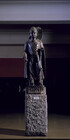
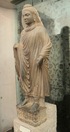
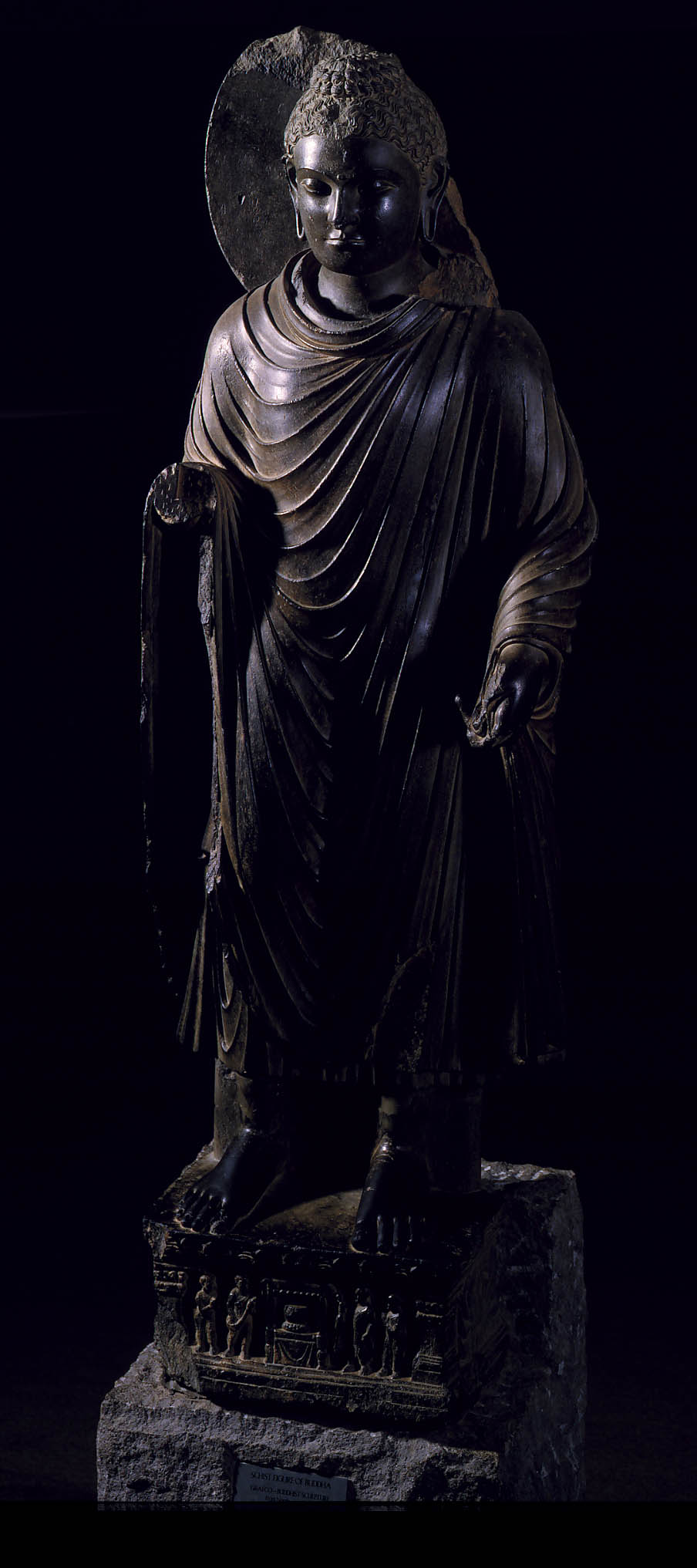
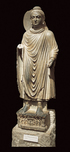
| http://erlangen-crm.org/current/P3_has_note | This statue shows Buddha, the wise man on whose teachings the Buddhist religion is based. He lived and taught in India sometime between 600 and 400 BC. The statue is carved from schist, a type of rock that was quarried in the hills of the Peshawar Province of Pakistan. It was carved in the second or third century AD. We don’t know who the artist was. When this sculpture was carved, the region was an independent kingdom called Gandhara, which is how this Buddha gets his name. While Buddhism comes from this part of the world – it is a local religion – the style of this statue is Greek and Roman. So this is an Asian religious figure carved in a way that reflects the artistic ideals of cultures from another part of the world. How that came to be is related to the story of Alexander the Great, a Greek king who became a famous military commander, leading an army that conquered this region in 327 BC. Gandhara was, for about 20 years, a colony of Greece, and part of the huge empire that Alexander created, which stretched from Greece to Egypt to India. This explains the fusion of different cultural traditions. Buddha has been treated like a Greek statue. He stands front on, in a classical pose, wearing an elegant toga or robe that drapes in sharp folds, just like you find on statues of Roman senators. Buddha’s hair is wavy, and he has a topknot that is also found in classical images of the god Apollo. There are Corinthian columns on the base that Buddha stands on, and this plinth also has a little frieze, a row of figures who are standing on either side of a relic, a sacred object associated with Buddha’s life, which might be a bowl for collecting money. Buddha has lost his right hand, and his aura or halo behind his head has been damaged, but this statue remains an amazing example of creativity, of a religious tradition from one place being changed by the artistic tradition from another place. These types of statues, fusing Asian and European culture, were made from the 1st century AD until the 8th century, when the Muslim invasion of the region led to another change in art and culture. |
| http://erlangen-crm.org/current/P43_has_dimension | http://api.aucklandmuseum.com/id/humanhistory/object/7493/dimension/1 |
| http://erlangen-crm.org/current/P45_consists_of | http://api.aucklandmuseum.com/id/humanhistory/object/7493/material/1 |
| http://erlangen-crm.org/current/P46i_forms_part_of | http://api.aucklandmuseum.com/id/humanhistory/object/7493/collection |
| http://erlangen-crm.org/current/P50_has_current_keeper | http://api.aucklandmuseum.com/id/humanhistory/object/7493/keeper |
| http://erlangen-crm.org/current/P51_has_current_owner | http://api.aucklandmuseum.com/id/humanhistory/object/7493/legalBody |
| http://purl.org/dc/elements/1.1/description | grey schist figure of Buddha, featuring in Samadhi, arm raised, left hand holding a fold of pleated robe, base carved with devotees standing to either side of model stupa, foliate motifs Statue of Buddha (in Greco-Roman style), Gandhara (aka Ghandara), present-day Afghanistan and Pakistan Statue of Buddha (in Greco-Roman style) Gandhara (aka Ghandara), present-day Afghanistan and Pakistan ‘This single standing figure of the Buddha was carved from schist, a soft bluish stone of clay-slate quarried in the hills to the north of Peshawar Province of north-west India (now a part of Pakistan) by a Indian sculpture on the second or third century of the present era. The region near the Khyber Pass was once an independent kingdom known as Gandhara. It was conquered in 327-26 BC by a Greek army lead by Alexander the Great, and for about twenty years it was a colony of Greece. This large and impressive figure clearly shows the influence which classical Greek three-dimensional statuary has had on this part of the world. The treatment of the hair below the protuberance on the top of the head is in the mature Greek manner, as are the stylized folds of the toga-like robe. The right hand of the Buddha is raised in a pose of reassurance, while the base carries a Greek-like frieze flanked on either side by an Indio-Corinthian pilaster. The alms bowl of the Buddha in the center is worshiped by two men on either side.’ [BM] Statue of Buddha (in Greco-Roman style), Gandhara, present-day Afghanistan and Pakistan, 2nd - 3rd century AD Classical type Buddha in Roman dress 2nd-3rd Century A.D. Found in Gandhara, North India (now Pakistan) Carved in grey schist stone Base: Adoration of a Reliquary Ht: 1500 mm. Auckland Museum cat. no. 277 Mackelvie Collection The free-standing stone statue of the Gandhara Buddha on display in the Mackelvie Collection, is arguably one of the most important cross-cultural treasures in the Museum's collections. The legacy of Alexander the Great's conquest of the Persian Empire and his expedition to India, was the grafting of Hellenism onto the art and culture of Western Asia. In later times, Roman culture also had a profound influence on the art and architecture of the region. The statue has a frontal pose and is the most classical type. The head has the topknot of wavy hair, or krobylos, borrowed from Classical images of the god Apollo and the face is youthful and serene.* The body has a relaxed leg visible beneath the voluminous drapery, which falls in sharp parallel folds reminiscent of contemporary statues of togaed Roman senators. The damaged aura behind the head was originally circular and the Buddha's raised right hand is missing. The front of the base is decorated with two engaged Corinthian columns supporting an ornate frieze. Placed between the columns is the popular Buddhist scene, ‘Adoration of a Reliquary’. A vessel containing a relic stands on a table under a canopy. The table is flanked on both sides by two priests in Roman dress. The sides of the base are decorated with classical palmettes. In the 1st Century A.D. a school of Buddhist sculpture was established in the city of Gandhara. The school flourished until the Muslim invasions of the 8th Century A.D.** *best typified by the head of the Apollo Belvedere. **Gandhara sculpture was influenced by the Classical cult of the colossal, typified by the giant effigies of Roman Emperors. This trend was to manifest itself in the two colossal images of Buddha at Bamiyan, on the ancient Silk Route, in modern Afghanistan, which were destroyed in 2001. |
| http://purl.org/dc/elements/1.1/title | figure |
| http://www.w3.org/1999/02/22-rdf-syntax-ns#type | http://erlangen-crm.org/current/E22_Man-Made_Object |




- Set the
Acceptheader toapplication/ld+jsonto get JSON-LD for this subject - Set the
Acceptheader toapplication/jsonto get simple JSON representation for this subject